Animal Pattern Contact Lenses can turn a familiar look into something striking, from subtle leopard flecks to vivid feline-inspired rings. Yet appearance is only one part of a responsible purchasing decision. Buyers also need clear product specifications, consistent manufacturing, responsive service, and dependable documentation. Details matter.
This introduction to China’s top 10 suppliers is a practical starting point, not an unsupported guarantee or universal ranking. Assess suppliers through verifiable details: lens designs, material and packaging information, customization options, quality-control procedures, order quantities, and pre-shipment communication. Ask for current product records and sample images, and confirm that claims match the goods offered. A polished catalog helps, but it proves little on its own.
Comfort and eye health deserve equal attention. Decorative lenses require careful fitting and hygiene; consult a qualified eye-care professional and follow applicable local requirements. A supplier’s willingness to answer safety and traceability questions matters, as does consistency between samples and bulk orders. No supplier is ideal for every buyer. Price may look attractive, while lead times or documentation need another check. That deserves reflection. This guide helps retailers, distributors, and sourcing teams compare options with clearer expectations. Supplier information can change, so verify it independently before purchasing. The best choice is not necessarily the most colorful one. It is the one whose product, records, and service hold up under careful review.
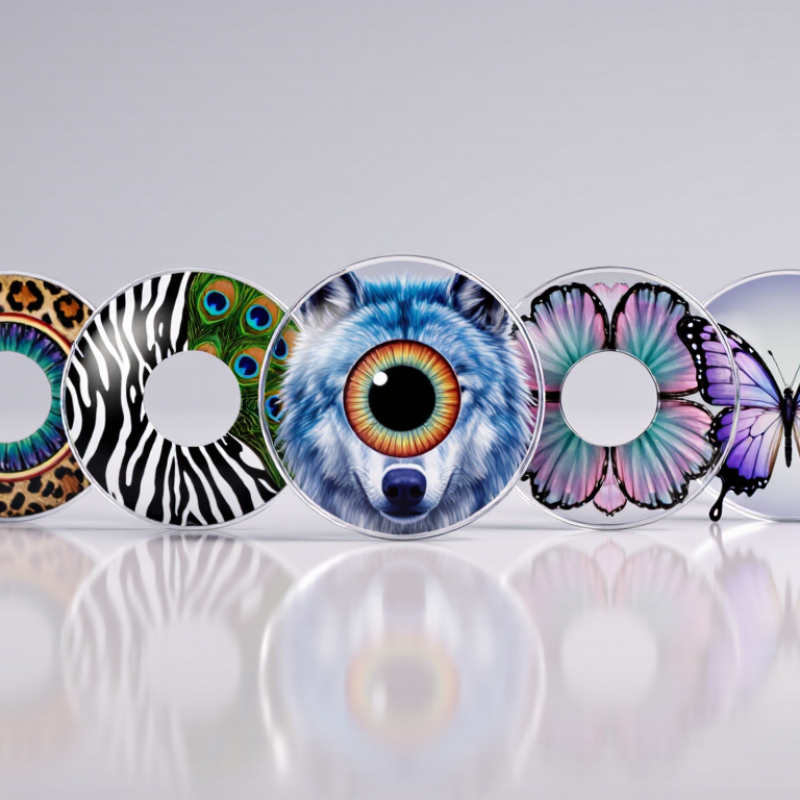
Animal pattern contact lenses use printed designs to create effects inspired by animal eyes, such as narrow feline pupils or reptile-like color. They are cosmetic lenses, but they still sit directly on the eye. The printed area and lens fit can affect comfort, clarity, and peripheral vision.
Their uses range from costume photography and stage performances to themed events. Under bright studio lights, a bold pattern may look vivid; in ordinary indoor light, its colors can appear softer. The result varies between people. I would not assume that a dramatic online image shows how the lens will look on every eye.
Comfort matters more than the pattern. A qualified eye-care professional can check fit and explain whether a lens suits your vision and eye health. Follow the care instructions, wash and dry your hands before handling lenses, and never share them. Avoid sleeping or swimming in lenses unless a professional specifically confirms they are suitable for that use. If your eyes become painful, red, or unusually sensitive to light, remove the lenses and seek professional advice. A striking design is not worth risking clear, comfortable vision.
China’s animal pattern contact lens supply market sits within a much larger contact lens industry. Grand View Research valued the global contact lens market at about US$18.2 billion in 2023 and forecast 8.5% annual growth from 2024 to 2030. That figure covers the wider category, not animal-print lenses alone. The niche is harder to measure. In practice, Chinese suppliers may handle pattern development, lens molding, packaging, and export coordination, while buyers compare samples, production capacity, and order quantities. Small details matter: a cat-eye print must remain crisp without obscuring the central viewing area.
Orders usually move through sample approval, specification checks, batch production, and inspection. Buyers should ask for material details, water content, base curve, diameter, and test documentation—not just attractive product photos. Pattern consistency deserves attention. A sample can look sharp under studio lighting, while a bulk batch appears lighter or uneven. It happens. Grand View’s market data signals broader demand, but it does not prove that every animal design will sell. Supplier selection still depends on transparent specifications, traceable quality checks, and clear communication when a sample needs revision. There is no perfect shortcut.
An overview of ten common supplier types and supply-chain roles. These are anonymized market segments, not a verified company ranking.
| No. | Supplier Type | Typical Animal-Pattern Offering | Customization Scope | Quality and Compliance Checks | Best-Fit Buyer |
|---|---|---|---|---|---|
| 1 | Contact lens manufacturer with in-house printing | Printed cosmetic lenses with animal-inspired motifs, such as feline, reptile, or spotted effects. | May offer pattern, color, packaging, and private-label options; available parameters depend on the product range. | Request product specifications, batch traceability, test records, and market-specific regulatory documentation. | Buyers seeking a direct manufacturing relationship and control over product specifications. |
| 2 | OEM / private-label producer | Existing decorative lens designs supplied under a buyer’s label, where permitted by the supplier and local rules. | Often focused on branding, packaging, and selection from existing designs; custom tooling or artwork may require separate review. | Confirm who is the legal manufacturer, whose name appears on the label, and which party manages market authorization. | Retailers or distributors building a label without developing every design from scratch. |
| 3 | Custom-design and development supplier | New animal-pattern artwork developed for a specified lens appearance. | Artwork, color placement, and sample revisions may be discussed; final appearance and feasibility require product sampling. | Review approved artwork, sample consistency, material specifications, and change-control procedures. | Brands needing distinctive designs and willing to complete a longer development and validation process. |
| 4 | Large-volume production supplier | Repeat production of established decorative patterns across agreed product specifications. | Customization is commonly more practical after a design and specification have been finalized. | Assess production controls, lot identification, inspection records, and the supplier’s ability to maintain consistency between batches. | Established importers or distributors with predictable demand and defined specifications. |
| 5 | Small-batch or sampling-focused producer | Samples or limited production runs used to assess a pattern, fit, packaging, or market response. | May support early-stage design evaluation; minimum quantities and sample charges vary by supplier. | Treat samples as evaluation units and verify that commercial production uses the approved specification and documented controls. | New buyers testing demand before placing larger orders. |
| 6 | Decorative-lens product specialist | Cosmetic lens collections organized around visual effects, including animal-inspired patterns. | May provide a broader range of pattern choices than a general lens supplier; confirm which parameters are actually available. | Check that each style has its own product identification, labeling, and applicable technical documentation. | Online and specialty retailers sourcing a focused range of decorative lenses. |
| 7 | Export-oriented medical-device supplier | Decorative lenses prepared for export, subject to the product’s intended use and destination-market requirements. | Export packaging, language, and documentation can be discussed for specific markets. | Verify destination-specific requirements directly. A quality-system certificate does not by itself establish product authorization in every market. | Importers that need market-specific documentation and established export processes. |
| 8 | Packaging and private-label coordination supplier | Coordinates branded cartons and labeling for lenses produced by a separate manufacturer. | May support artwork and packaging adaptation; the lens manufacturer and responsible legal entity should be clearly identified. | Check label accuracy, traceability, required warnings, and consistency between packaging claims and product documentation. | Buyers that need packaging coordination alongside a separately sourced lens product. |
| 9 | Trading or sourcing company | Sources animal-pattern lenses from one or more manufacturers and coordinates quotations or orders. | Options depend on the selected factory; custom requests may need to be approved by the actual manufacturer. | Identify the manufacturing site, confirm authorization to sell the product, and obtain documents from the responsible manufacturer. | Buyers seeking consolidated communication or access to multiple product categories. |
| 10 | Integrated manufacturing and export supplier | Combines product production with export-order coordination for decorative lens lines. | May coordinate product selection, packaging, and shipping; verify which functions are performed in-house. | Confirm manufacturing location, product specifications, batch records, shipping terms, and applicable market documentation. | Importers looking for a single point of contact across production and export arrangements. |
Buyer note: Contact lenses, including decorative lenses, may be regulated as medical devices depending on the destination market and intended use. Verify the applicable authorization, labeling, prescription, and import requirements with the relevant regulator or qualified compliance professional. Product parameters, order quantities, samples, and lead times vary by supplier and must be confirmed in writing.
Animal-pattern contact lenses may look like fashion accessories, but supplier checks should begin with product safety and compliance. Confirm which markets the supplier serves and verify that its products meet the applicable requirements there. Ask for current certificates, their scope, and the issuing body; a document alone is not enough. A neat certificate folder is not proof.
Review the supplier’s quality controls, production records, and batch traceability. Can each lot be linked to its materials, inspection results, and release decision? Request validated test reports for relevant properties, such as lens power, dimensions, oxygen permeability, and packaging integrity. Sterility and microbial controls also need clear evidence. Check labels for wear instructions, warnings, and traceable lot details. Small gaps matter.
Look beyond promotional images and ask how complaints, defects, and recalls are handled. A capable supplier should explain response times, investigation steps, and corrective actions in writing. Where possible, have documents reviewed by a qualified quality or regulatory professional, and use a controlled evaluation process for samples. I would not rely on a quick visual check; it cannot reveal every manufacturing issue. Supplier evaluation takes time, and sometimes the paperwork raises more questions than it answers. That deserves a pause.
Profiles of ten Chinese animal-pattern contact lens suppliers are most useful when they compare verifiable capabilities, not just product photos. Grand View Research’s Contact Lenses Market Size, Share & Trends Analysis Report estimated the global contact lens market at about US$20.8 billion in 2023, with projected growth through 2030. This broad market figure includes many lens types; it does not measure demand for animal-pattern designs specifically. That distinction matters.
Each profile can examine manufacturing scope, pattern options, sample availability, quality checks, traceability, and export documentation. Look for clear product specifications, consistent print placement, and transparent responses about production tolerances. Details matter. The U.S. Food and Drug Administration’s guidance on contact lenses emphasizes professional fitting and safe use, a reminder that appearance alone is not a reliable quality measure. Supplier claims should be checked against current records and the requirements of the intended market.
A limitation deserves attention: public information about individual factories can be incomplete or difficult to compare. Buyers should request dated documents and inspect physical samples before drawing conclusions. Even a striking pattern may look different under indoor lighting. These profiles therefore focus on practical questions and documented evidence, while leaving room for follow-up verification.
Reference chart: common replacement schedules for contact lenses, shown in days.
Replacement schedules vary by product. Follow the specific lens labeling and the advice of an eye-care professional. This chart presents general schedule intervals; it does not compare or rank suppliers.
Ordering animal pattern contact lenses starts with clear specifications. Ask suppliers about available diameters, base curves, replacement schedules, and prescription options. Request written confirmation of the quoted price, minimum order quantity, production time, and shipping terms. A sample pair can help assess print clarity and packaging, but it cannot confirm a safe fit. Have an eye-care professional check lens fit before wearing any new design. Small details matter.
Customization may include pattern scale, color density, packaging, or private-label presentation. Share a reference image and state which features must remain consistent across production batches. Ask how the supplier checks color variation and lens parameters. A mock-up is useful, though monitor colors can differ from the finished product. I have seen buyers focus on vivid prints and overlook fit data; that is an easy mistake to repeat.
Tips: Keep order records, approved samples, and written specifications together. Before confirming a bulk order, ask about defect reporting, replacement terms, and response times. After delivery, inspect sealed packaging and product information. If a lens feels uncomfortable, remove it and seek professional advice rather than trying to adjust it yourself. Support should be specific, not just a promise to “help later.”
Confirm the markets served and request current certificates with their scope and issuing body. A tidy folder proves little by itself.
Ask for production records, inspection results, and batch traceability. Each lot should link to its materials and release decision. Small gaps matter.
Request validated reports for lens power, dimensions, oxygen permeability, and packaging integrity. Ask for clear evidence of sterility and microbial controls.
No. Photos cannot confirm lens fit or manufacturing quality. A vivid print may also look different under indoor lighting.
Use a controlled sample review and examine print clarity and packaging. A sample pair cannot confirm a safe fit; ask an eye-care professional to check fit.
Get the price, minimum order quantity, production time, shipping terms, and product specifications in writing. Keep approved samples and order records together.
Ask about pattern scale, color density, and packaging. Share a reference image and specify which features must stay consistent between batches. Monitor colors can mislead.
Request written defect-reporting steps, replacement terms, investigation details, and response times. After delivery, check sealed packaging and product information. “We’ll help later” is vague.
This article explores the market for Animal Pattern Contact Lenses in China, beginning with their decorative uses and the importance of choosing products suited to individual needs. It explains how suppliers may differ in product range, manufacturing capabilities, customization options, and order processes, giving readers a practical framework for comparing potential partners.
The guide also outlines key factors to assess before placing an order, including product quality, transparent documentation, manufacturing controls, and applicable safety and compliance requirements. Profiles of ten Chinese suppliers offer a starting point for further research, while sections on ordering, customization, communication, and after-sales support help buyers understand what to ask throughout the purchasing process. The aim is to support informed supplier evaluation rather than replace independent verification of product suitability and credentials.

Blink Lenses